
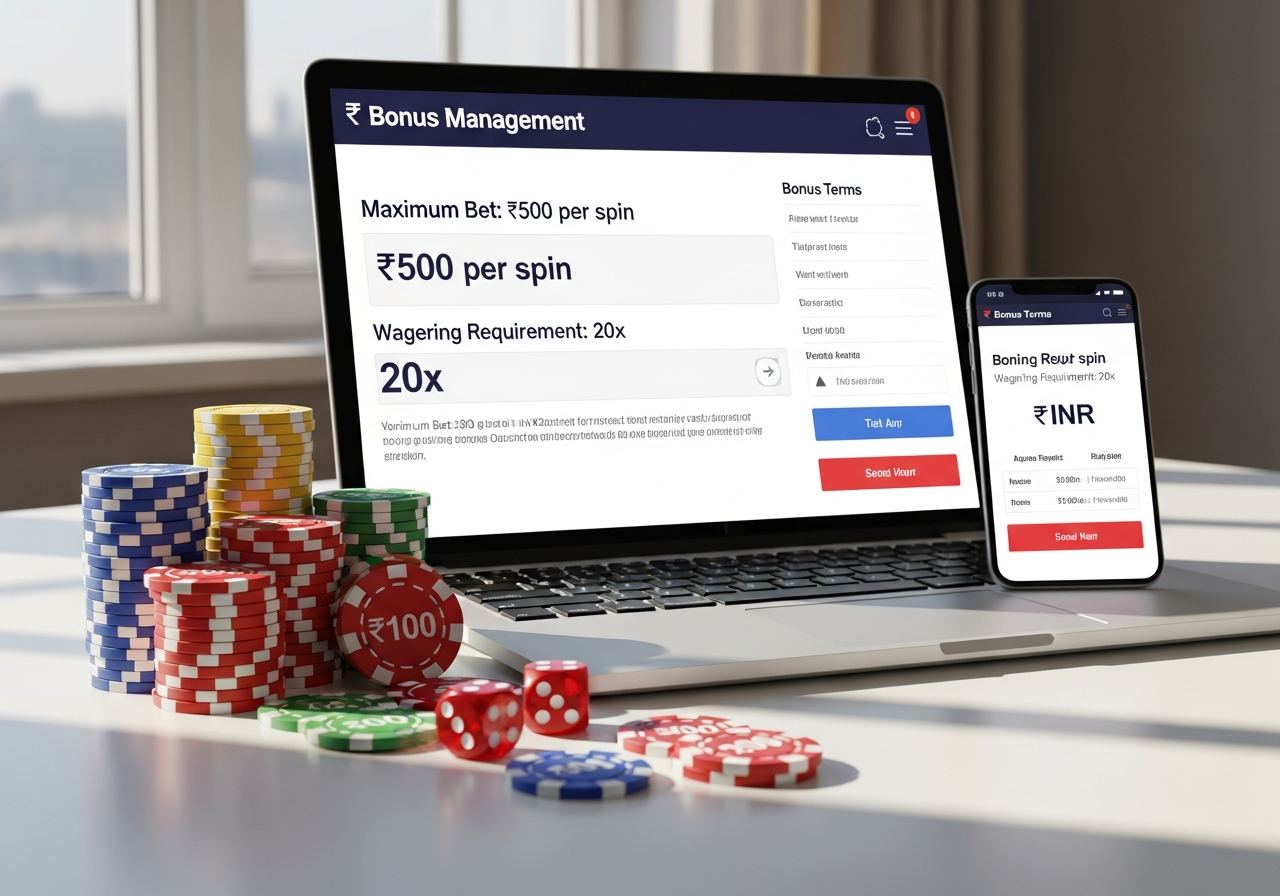
When Indian players encounter an online casino bonus, the generous welcome offer in rupees often masks a critical but overlooked mechanic: maximum bet limits. While bonuses can look attractive on the surface, hidden restrictions in the terms and conditions determine how much you can wager per spin or hand, how quickly you’ll clear the playthrough requirement, and—most critically—whether your winnings will actually be paid out. Understanding these limits before you start wagering is essential to avoid frustration, disputes, and forfeited funds.
This guide focuses on Indian-facing casino and sports betting sites, explaining in straightforward terms how maximum bet limits work during bonus play, why operators enforce them, and what strategies help you navigate these restrictions safely. Whether you’re a casual player chasing a welcome bonus or a high roller testing a new platform, knowing the interaction between bet caps and wagering requirements can mean the difference between a profitable bonus experience and a cancelled withdrawal.
What Are Maximum Bet Limits In Indian Bonus Play?
Maximum bet limits are caps on the stake size you are allowed to place while an active bonus balance is attached to your account. In practical terms, if a casino offers you a ₹1,000 bonus but stipulates a maximum bet of ₹200 per spin, you cannot legally place a ₹300 wager during bonus play—even if the game’s technical maximum allows it. Any bet above the stated limit risks voiding your bonus winnings.
These limits are typically expressed in fixed Indian rupee amounts (e.g. ₹500 maximum per spin) or as a percentage of your bonus or deposit (e.g. 10% of the ₹1,000 bonus = ₹100 per spin). Some casinos apply a combination rule, where the lower of the two amounts applies. Critically, maximum bet rules are often stated only in detailed bonus terms and conditions rather than being enforced automatically by the game software. This means you must actively track your own stakes to stay compliant—casinos do not usually block you from placing an over-limit bet, but they reserve the right to use it as grounds to confiscate winnings later.
Types Of Maximum Bet Rules Used By Casinos
- Absolute fixed cap: A set rupee amount such as ₹500 per spin on all slots, regardless of bonus size or deposit amount.
- Percentage-based cap: A percentage of your bonus balance (e.g. 10% or 5%), meaning a larger bonus allows slightly larger bets but still keeps stakes modest.
- Tiered caps: Different limits for different game categories (e.g. ₹300 per spin on slots, ₹100 per hand on blackjack, ₹50 per sports bet).
- Deposit-linked cap: A percentage of your deposit (e.g. 5% of your ₹5,000 deposit = ₹250 maximum stake during bonus wagering).
- Combined rules: The lower of two conditions applies—for example, “10% of bonus OR ₹300, whichever is lower”—ensuring even generous bonuses come with strict caps.
These structures are standard in international casino terms and are especially common among India-facing sites offering large welcome bonuses in INR.
How Indian Sites Display Max Bet Limits
Serious operators targeting Indian players typically display maximum bet information on their bonus pages, within detailed terms and conditions documents, or in dedicated FAQ sections labelled “maximum bonus bet,” “max stake during wagering,” or “maximum allowed wager.” The limits are usually quoted in INR and are tied explicitly to bonus play—the non-bonus, regular play maximum bet is often substantially higher or unlimited. However, many operators bury these details in fine print or link to dense legal documents that most players skip, creating an information gap where casual players unknowingly breach terms and later face denied withdrawals.
Why Operators In India Use Maximum Bet Limits
- Volatility control: Smaller bet sizes reduce the variance on bonus play; without caps, a player could place one massive ₹10,000 bet and either win a huge jackpot or lose the entire bonus in seconds, creating unsustainable swings in the casino’s liability.
- Abuse prevention: Maximum bet limits stop players from attempting to “game the system” by placing a single enormous stake on a high-volatility slot to try to hit a big win and clear wagering instantly, a pattern operators consider bonus abuse.
- Loss containment: By capping per-bet stakes, casinos reduce the maximum payout that can result from bonus play, protecting themselves from unexpectedly large bonus-derived winnings.
- Liability alignment: Max bet caps work alongside maximum payout limits and other restrictions to create a predictable risk profile for bonus budgets.
- Market-specific requirements: India’s generous welcome bonus landscape (often ₹5,000 to ₹15,000 in INR) means operators must impose strict bet caps to avoid unsustainable losses, especially as promotional budgets scale across a large player base.
- Compliance and dispute reduction: Clear maximum bet rules (even if restrictive) provide a transparent baseline that reduces player complaints and chargebacks when winnings are declined.
Volatility, Liability And Bonus Abuse Control
Higher bets increase the volatility of your bonus play, meaning your bankroll can swing wildly up or down in just a few rounds. Without maximum bet limits, a player with a ₹2,000 bonus could place a single ₹5,000 bet on a high-volatility slot, hitting a ₹50,000 jackpot on one spin and creating a massive payout liability for the casino. By capping maximum bets—for example, to ₹300 per spin—operators ensure that even a lucky streak results in manageable payouts. These limits also work hand-in-hand with other anti-abuse tools such as “one bonus per household” policies, maximum cashout caps, and game contribution restrictions, creating a layered approach to risk management that protects operator margins while still offering meaningful bonus value to players.
Legal And Regulatory Context For Bonus Limits In India
Individual players can legally access and use offshore casino bonuses; India’s gambling laws do not criminalize players for playing on international sites. However, operators themselves face significant regulatory risk. To mitigate this, operators add strict bonus terms—including maximum bet and maximum win limits—to demonstrate responsible business practices and control exposure in a jurisdiction with evolving gambling regulations.
India’s gambling framework is a patchwork of state-level laws and central regulations, with some states allowing specific forms of gambling while others prohibit it entirely. Bonuses are typically framed as promotional marketing tools rather than gaming products themselves, which gives operators some legal cover to impose restrictive terms. Clear disclosure of maximum bet and wagering rules is important both for transparency and for dispute resolution; even in jurisdictions where gambling law enforcement is lax, a player complaint backed by documented terms can lead to regulatory scrutiny or payment processor issues for the operator.
Player Responsibility Versus Operator Liability
- Operators face legal and regulatory scrutiny, making strict bonus terms a defensive measure; however, players are ultimately responsible for respecting the terms they accept at signup.
- Read all bonus terms before activating and specifically note the maximum bet figure; store this information in a document or screenshot for reference during play.
- Avoid placing bets that could be later cited as a breach; a single bet above the stated maximum can be used as grounds to void your entire bonus and any winnings derived from that session.
- Contact support in advance if terms are unclear; if you receive a written confirmation that a certain stake is allowed, you have evidence to dispute a later confiscation claim.
How Indian-Facing Casinos Communicate Bonus Limits
Reputable operators targeting India tend to specify wagering requirements, bonus expiry periods, maximum bet and maximum win limits clearly on their promotional pages and in detailed bonus terms. However, these details are often nested in lengthy documents or hyperlinked footer sections that players habitually skip. Some sites use tables or bullet points to highlight key figures, while others present maximum bet information only as a single sentence buried in paragraphs of legal text. The variation in presentation means that even a diligent player must actively search for the maximum bet figure rather than being presented with it prominently.
Interaction Between Max Bet Limits And Wagering Requirements
| Bonus scenario (INR) | Wagering requirement | Max bet per spin/hand | Estimated spins to clear | Risk/volatility profile |
|---|---|---|---|---|
| ₹500 bonus, ₹500 deposit | 20x (₹10,000) | ₹100 | ~100 spins | Low–medium, extended session required |
| ₹1,000 bonus, ₹1,000 deposit | 20x (₹20,000) | ₹200 | ~100 spins | Medium, balanced gameplay |
| ₹1,000 bonus, ₹1,000 deposit | 20x (₹20,000) | ₹500 | ~40 spins | High volatility, quick finish or bust |
| ₹2,000 bonus, ₹5,000 deposit | 25x (₹50,000) | ₹250 | ~200 spins | Medium, longer session, lower per-spin risk |
| ₹5,000 bonus, ₹5,000 deposit | 35x (₹175,000) | ₹500 | ~350 spins | High variance, high burnout risk without discipline |
| ₹5,000 bonus, ₹5,000 deposit | 35x (₹175,000) | ₹1,000 | ~175 spins | Very high volatility, rapid swings, fast clearance or bust |
A bonus like ₹1,000 with a 20x wagering requirement means you must place ₹20,000 in total bets before the bonus converts to withdrawable cash. If the maximum bet is ₹200 per spin, you will need roughly 100 spins to meet that requirement (₹20,000 ÷ ₹200 = 100 spins). If the maximum bet is ₹500 instead, you could theoretically complete the wagering in just 40 spins—but you face much higher volatility and risk busting your bankroll faster. Lower maximum bets slow your progress but reduce the likelihood of a catastrophic losing streak eliminating your bonus before you clear the playthrough.
Clearing Wagering Under Different Max Bet Caps
Consider two common scenarios. A player receives a ₹1,000 bonus with a 20x wagering requirement (₹20,000 total bets) on a medium-volatility slot. Under a tight ₹100 maximum bet cap, the player anticipates 200 spins to clear the requirement, extending the session and reducing per-spin variance. Even a few consecutive losses are unlikely to eliminate the entire bankroll, allowing the player to recover over many spins. In contrast, the same bonus with a ₹500 maximum bet allows clearance in just 40 spins on average. While this is faster, it exposes the player to much larger swings—a 5-spin losing streak could eliminate ₹2,500 of the total funds, leaving little buffer. High rollers often prefer the relaxed cap because they can clear wagering quickly, but casual players frequently find tight caps safer, even if they extend playtime.
How Maximum Bet Limits Can Void Bonus Winnings
- You place a bet above the stated maximum during bonus wagering, either intentionally or by accident, while your bonus balance is still active.
- The casino’s system does not block the bet in real time; the wager is accepted and the spin result is recorded normally.
- You continue playing, clear the wagering requirement, and request a withdrawal of your bonus winnings.
- Casino support reviews your play history and identifies the over-limit bet(s).
- Support invokes the bonus T&Cs and confiscates the bonus balance and all winnings derived from that bonus round, citing breach of maximum bet rules.
- You are left with only your original deposit, or sometimes even a reduced balance if the casino applies losses from the over-limit bets.
- Appeals are rarely successful because the term breach is documented in the T&Cs you accepted, and the casino’s position is defensible under most international gambling frameworks.
Even a single accidental over-limit bet—or even a losing bet above the maximum—can be grounds for confiscation. The key issue is that casinos reserve the right to use any breach as justification for voiding the entire bonus, not just the winnings from that specific bet. This asymmetry is explicitly permitted in most bonus terms and is a major source of player frustration and disputes.
Typical Dispute Scenarios Faced By Indian Players
A common pattern emerges repeatedly in player complaints across Indian forums and dispute platforms. A player claims a welcome bonus, plays diligently for several hours, clears the wagering requirement, and submits a withdrawal request for ₹8,000 (deposit plus bonus winnings). A day or two later, support responds with a message stating that a breach of maximum bet rules has been identified—specifically, the player placed three bets of ₹600 each on a slot where the maximum bonus bet was ₹500. Support informs the player that the entire bonus and any winnings derived from bonus play are forfeit, and only the original deposit is available. The player is shocked, believing they played correctly and overlooked one small detail. This scenario underscores the importance of consistently keeping stakes below the limit from the very first bet, not just for most of the session.
How To Document Compliance With Max Bet Rules
- Screenshot the bonus terms and maximum bet section immediately after claiming the bonus, including the date and the specific figures, so you have a timestamped record of what you understood to be the rules.
- Keep a simple spreadsheet or note listing the bonus offer name, maximum bet, wagering requirement, and the date you activated it; update this as you play to track progress toward clearance.
- Avoid sudden bet-size jumps; if you normally bet ₹200 per spin, do not suddenly jump to ₹400 even if you think you can afford it, as such patterns can look suspicious and may be flagged as abuse.
- Contact support in writing (via live chat with a transcript or email) if terms are ambiguous, for example if you are unsure whether ₹500 means the maximum stake or the maximum win per spin; ask for written confirmation.
- Retain access to your account history and play logs; most casinos allow you to export a session history that shows each bet placed, which serves as evidence if a dispute arises later.
- Do not rely on verbal assurances from support; if an agent tells you a certain bet size is okay, ask them to send you written confirmation via email that supersedes the standard T&Cs.
Local Currency Betting Limits And Their Effect On Indian Bonus Play
| Currency | Standard casino max bet (non-bonus) | Typical bonus max bet | Impact on high rollers | Impact on casual players |
|---|---|---|---|---|
| INR (India) | ₹50,000–₹5,00,000+ per spin | ₹300–₹1,000 per spin | Drastically restricts normal staking; bonuses feel impractical | Limits are realistic; most casual bets fall well within cap |
| USD (global baseline) | $500–$5,000 per spin | $5–$20 per spin | Severe constraint; high rollers often skip bonuses | Minimal impact; small stakes typical anyway |
| EUR (Europe) | €100–€1,000 per spin | €5–€25 per spin | Moderate restriction; VIP offers sometimes higher | Fair balance; typical bets stay compliant |
| GBP (UK) | £100–£1,500 per spin | £10–£50 per spin | Moderately restrictive; regulated market offers some relief | Standard approach; player-friendly in most cases |
Global casinos calibrate betting caps using a standard model: baseline maximum bets are set high to accommodate high-volume players, but bonus-specific maximum bets are set much lower to control risk and volatility on promotional funds. This split is especially pronounced in markets like India, where non-bonus maximum bets can reach ₹5,00,000 or more per spin (for high rollers), but bonus-related maximum bets are often capped at just ₹500 to ₹1,000. This creates a stark contrast that can feel jarring to players accustomed to placing large stakes in regular play.
Differences Between Global Limits And India-Facing Bonus Caps
Even if a game’s underlying technical maximum bet in INR is very high—say, ₹10,00,000 for a progressive jackpot slot—bonus terms almost always override this with much smaller limits, especially on welcome packages and reload offers targeted at India. The reason is simple: operators want to cap their aggregate liability on promotional funds, and India’s large bonus values (often ₹5,000 to ₹15,000) necessitate proportionally lower per-bet limits to keep risk manageable. This means that a high roller accustomed to ₹50,000 stakes in regular play will find bonus play frustratingly constrained at ₹500 maximum, effectively making bonuses impractical for their normal wagering style. In contrast, a casual player betting ₹100 per spin will encounter no friction and may not even notice the bonus cap.
Slots, Table Games And Sports Bets: How Max Bet Rules Apply Differently
| Game type | How max bet applies | Common bonus restrictions | Volatility considerations | Notes for Indian players |
|---|---|---|---|---|
| Slots (reels) | Per spin; applies to all lines/symbols together | ₹300–₹1,000 max; some exclude bonus buy features | High variance possible; RTP constant across bet sizes | Max bet directly affects session length; lower caps extend play |
| Roulette/Blackjack (live dealer) | Per hand or spin; live dealer games sometimes excluded | ₹200–₹500 max; side bets often prohibited | Moderate variance; strategic betting patterns restricted | Steady-paced; max bet limits have minimal impact on entertainment value |
| Video Poker/Table Games (RNG) | Per hand; combinations with max payout can trigger | ₹100–₹400 max; some games excluded entirely | Low–medium variance; fixed payout tables | Simple rules; easy to comply with max bet without adjusting strategy |
| Sports betting (free bets/matched bets) | Per bet slip; may also cap minimum odds per bet | ₹500–₹2,000 max; often minimum odds of 1.5 or higher required | Depends on sport and market variance | Cricket, football limits crucial; multiple-bet slips may count separately |
| Live betting (in-play sports) | Per in-play bet; sometimes separate, stricter cap | ₹100–₹500 max; fast-moving markets may exclude certain bets | High variance; odds change rapidly | Speed required; must track max bet in real time during fast gameplay |
Maximum bet limits operate differently across game categories, and understanding these differences is crucial for compliant and strategic bonus play. On slots, the maximum bet applies to the entire spin regardless of how many lines you activate—a ₹300 maximum means no single spin can exceed ₹300 in total stake, not ₹300 per line. On live casino games like roulette or blackjack, the limit applies per hand or decision, and some casinos prohibit side bets entirely during bonus play because they are not weighted toward wagering requirements. Sports betting bonuses often have separate stake caps per bet slip and may add minimum odds requirements (e.g. all bets must have odds of 1.5 or greater), further restricting your staking flexibility.
Slots Bonus Play Under Max Bet Limits
Slot play under maximum bet restrictions is straightforward in execution but demands discipline. The maximum bet limit applies to each spin as a total stake, regardless of your line count or multiplier settings. Varying bet size does not change the underlying return-to-player (RTP) percentage; a slot with 96% RTP will deliver 96% average returns whether you bet ₹10 per spin or ₹300 per spin. Maximum bet limits during bonus wagering encourage players to use moderate, consistent stakes, which extends session length and allows gradual progression toward wagering requirements. This contradicts the high-volatility, all-in strategies that some players attempt when chasing quick wins. By keeping stakes well below the maximum, you create a buffer against losing streaks, maintain enough bankroll to last through longer wagering requirements, and reduce the temptation to chase losses with desperate bigger bets—a behavioural pattern that casinos actively discourage.
Sports Betting Bonuses And Stake Caps In India
- Free bet bonuses often cap the stake on each individual free bet (e.g. ₹500 maximum per free bet slip) and may require a minimum odds threshold such as 1.5 or 1.8 across all legs of a multi-bet.
- Matched deposit bonuses on sportsbooks typically set a maximum stake per bet slip and may count each leg of a multi-bet separately toward wagering, meaning a 3-leg parlay at ₹500 might count as ₹1,500 of wagering.
- Cricket and football betting in India often have especially low bonus max bet caps (₹200–₹500) because these high-liquidity markets can see dramatic odds swings, and casinos want to limit exposure to sharp bettors exploiting bonus terms.
- In-play (live) betting may be excluded entirely from bonus play or subject to even stricter stake limits due to the speed of odds changes and difficulty in real-time monitoring.
- Minimum odds requirements often accompany stake caps; a bonus might specify “maximum ₹500 per bet, minimum odds 1.5 across all legs,” forcing you to spread your ₹500 across longer-odds bets rather than concentrating it on low-odds favourites.
Bankroll Management For Indian Players Under Max Bet Constraints
- Set an overall session loss limit before you start—for example, “I will not lose more than ₹2,000 in this bonus session”—and stick to it regardless of how close you are to clearing wagering.
- Subdivide your bonus balance into smaller mental accounts, such as deciding to play in five sessions of ₹200 each rather than one large ₹1,000 session, so you can reassess risk and pacing between chunks.
- Choose bet sizes as a deliberate percentage of your remaining bankroll, for example 2–5% per spin, and set your maximum bet well below the casino’s cap (e.g. if the cap is ₹500, aim for ₹200–₹300 bets).
- Avoid emotional bet sizing such as chasing losses with suddenly larger bets or jumping to the maximum allowed stake after a winning streak; consistent, predetermined stake sizes reduce impulsive decisions and help maintain compliance.
- Use the casino’s built-in tools to cap your spending: most serious operators allow you to set a daily loss limit or time limit on your account, and activating these controls enforces discipline even if you feel tempted to overspend.
- Accept that smaller consistent bets help both compliance and responsible gambling; the combination of lower stakes and extended playtime creates a steadier experience with less volatility-driven stress.
- Track your progress toward wagering clearly by keeping a simple running total or using the casino’s progress bar, so you can see how many bets or hours remain and plan your session end time accordingly.
Aligning Bet Size With Risk Tolerance And Bonus Terms
Choosing the right bet size within the maximum bet constraint requires balancing your risk tolerance with the practical demands of the wagering requirement. Start by calculating a “safe bet size” as a percentage of your overall available bankroll (including deposit plus bonus). For example, if you deposit ₹5,000 and receive a ₹2,000 bonus for a total ₹7,000 available, you might select 5% per spin (₹350), which sits comfortably below both your personal risk comfort and the casino’s typical ₹500 maximum bonus bet. This stake size allows you to complete a 25x wagering requirement (₹175,000 in bets) across approximately 500 spins, distributing risk evenly and reducing the chance of busting early. Adjust your bet size over time only if you have explicitly calculated the change based on your remaining balance and time to clearance; avoid random bet jumps or increases tied to emotional wins or losses. This methodical approach also maintains natural betting patterns that operators do not interpret as abuse, preserving your access to future bonuses.
Advanced Bonus Strategies Within Max Bet Limits
More experienced players employ several higher-level tactics to maximise bonus value while respecting maximum bet constraints. Bonus hunting—selectively claiming offers at multiple casinos rather than claiming every bonus indiscriminately—allows you to compare maximum bet rules across sites and prioritise bonuses with looser caps relative to their wagering multipliers. Game selection matters enormously: medium-volatility slots and simple table games like roulette contribute fully to wagering requirements and do not spike your variance as dramatically as high-volatility games, making them better vehicles for meeting wagering under tight bet caps. Spreading wagering across multiple shorter sessions (e.g. 5 sessions of 20 spins each rather than 1 session of 100 spins) reduces the psychological pressure of a long grinding session and allows you to reassess your bankroll after each chunk. Deliberately betting well below the maximum allowed stake—for example, betting ₹100 when the cap is ₹500—creates a safety margin against accidental breaches and signals to the operator that you are playing naturally rather than aggressively gaming the system. Savvy players track RTP percentages, volatility ratings published by game developers, and the bonus contribution percentages for each game (e.g. slots count 100% toward wagering, but table games might count only 10%), then adapt their game and bet-size choices to optimise clearance efficiency while maintaining safety margins.
Choosing Games And Bet Sizes For Safer Wagering
- Prefer medium-volatility slots rated by the game studio as “medium” or “standard”—they deliver steadier payouts than high-volatility games and are less likely to create dramatic bankroll swings during long wagering grinds.
- Choose simple table games with clear RTP publishing, such as European roulette (97.3% RTP) or basic blackjack (99%+ RTP), where the mathematics are transparent and you are not exposed to complex bonus buy mechanics that might breach terms.
- Use stakes well under the maximum bonus bet—if the cap is ₹500, aim for ₹150–₹250 per spin to create a psychological and practical safety buffer against accidental breaches.
- Avoid high-risk side bets and progressive jackpots during bonus wagering; they often have lower RTP, are sometimes excluded from contribution, and create tempting large-payout scenarios that might trigger scrutiny if you win big.
- Check game contribution percentages before selecting: slots contribute 100% toward wagering, but table games, live games, and video poker might contribute 5–25%, meaning you need far more total bets to clear wagering on lower-contribution games.
Avoiding Bonus Abuse Flags While Optimising Value
Operators monitor betting patterns to detect bonus abuse. Behaviours that attract red flags include betting exclusively at the maximum allowed stake (suggesting you are trying to exploit the system rather than play naturally), sudden large bet increases followed by decreases (attempting to hit a big win and then revert to minimal bets), and using multiple accounts to claim the same bonus repeatedly. To preserve your access to future bonuses and maintain a good standing with the casino, maintain natural betting patterns: vary your stake size within a reasonable range (e.g. ₹100–₹300), avoid concentrated winning periods immediately following the maximum bet, and play across multiple game types rather than grinding the same slot for hours. These practices signal genuine player behaviour rather than promotional arbitrage, allowing you to extract bonus value while remaining in the operator’s good graces for future offers.
Special Considerations For High Rollers And VIPs In India
| Player segment | Typical bonus max bet | Pros of higher limits | Cons/Risks | Notes on VIP negotiation |
|---|---|---|---|---|
| Casual players | ₹300–₹500 | Realistic for most bets; easy to comply | Slow wagering clearance; extended sessions | Not negotiable; standard terms apply |
| Semi-regular players | ₹500–₹1,000 | Faster clearance; better balance | Moderate risk if discipline lapses | Request in writing; may be accommodated for loyal players |
| High rollers (₹50,000+ monthly) | ₹1,000–₹2,000 | Clearance feasible in sessions; higher win potential | Significantly higher volatility; faster busts possible | Negotiate via account manager; VIP programs often have custom terms |
| VIP/Whale (₹2,00,000+ monthly) | ₹2,000–₹5,000+ | Clearance in few sessions; aligns with normal play stakes | Very high variance; demands strong bankroll discipline | Directly negotiated; custom bonuses common; documented in writing |
Maximum bet limits can feel extremely restrictive for high rollers in India who ordinarily place bets in the tens of thousands of rupees per spin. For a player accustomed to ₹50,000 stakes, a ₹500 bonus maximum bet is impractical and essentially makes bonuses unusable. However, operator VIP programmes sometimes offer tailored bonuses with significantly higher maximum bet caps—sometimes ₹5,000 or more—or reduced wagering multipliers in exchange for consistent, demonstrable high-volume play. The trade-off is visible: higher maximum bets allow faster wagering clearance and larger bonus-derived payouts, but they magnify volatility and increase the risk of rapid bankroll loss. A high roller clearing a ₹10,000 bonus with ₹5,000 maximum bets could theoretically do so in 4 spins on a slot; a loss on one of those spins could wipe out the entire bonus.
Balancing Big Stakes With Bonus Compliance
High stakes players have a few practical options. First, clarify your maximum bet and maximum payout limits in writing with an account manager before claiming any bonus, ensuring you understand exactly what your VIP tier permits. Second, avoid assuming that your regular non-bonus maximum bet applies to bonus play; most casinos enforce a separate, lower cap for promotional funds even for VIPs. Third, consider skipping bonuses entirely when the maximum bet limits make them impractical—a high roller with a ₹50,000 typical stake size is often better served by simply playing without a bonus at regular maximum bets than by claiming a bonus with a ₹500 cap that fundamentally changes their wagering strategy. Finally, if your operator does offer customised VIP bonuses with higher maximum bets, keep all written communications and terms documentation; these personalised agreements can differ from standard T&Cs and provide you with explicit evidence of your agreed limits in any future dispute.
Responsible Gambling And Personal Bet Limits For Indian Players
- Set a personal maximum bet well below the operator’s limit—if the casino allows ₹500 per spin, decide your personal limit is ₹200 per spin, creating a safety zone where you are never close to breaching terms.
- Pre-define your session budget and loss limit before you play, for example “I will spend ₹2,000 today and will stop if I lose ₹1,500,” and commit to that boundary even if you feel close to clearing wagering.
- Avoid chasing losses with larger bets; if you have lost ₹500 unexpectedly, accept the loss and either end your session or reduce your stake size, rather than jumping to maximum bet to “get even quickly.”
- Use the casino’s tools to impose hard limits: activate a daily loss limit or time limit on your account so that you cannot exceed your chosen threshold even if you want to.
- Treat bonus play as entertainment, not as a guaranteed profit method; the odds always favour the house, and a bonus is a promotional gift, not a guaranteed income source.
- Know when to decline a bonus entirely if its terms—such as aggressive maximum bet rules, very high wagering multipliers, or short expiry periods—create a situation where you feel pressured to bet beyond your comfort level or risk more than you can afford.
- Seek support resources if you feel your bonus play is becoming compulsive; Indian players can access resources like the National Council of Community Advancement and Deliberative Services (NCCADS) or international help lines, and most casinos provide self-exclusion tools to pause or close your account.
Using Site Tools To Support Healthy Bonus Play
Responsible gambling tools offered by serious operators include deposit limits (capping how much you can fund your account in a day, week, or month), betting limits (setting a maximum bet size across the site), session time limits (auto-logging you out after a set duration), and cooling-off periods (locking your account for 24 hours or longer if you request). Indian players can combine these tools with awareness of bonus maximum bet caps to create a structured approach to risk. For example, you might set a site-wide deposit limit of ₹5,000 per week, a betting limit of ₹200 per spin, and a session time limit of 2 hours per day, then claim a bonus only if its maximum bet cap aligns with your ₹200 personal limit. This multi-layered approach prevents accidental overreach, respects the bonus terms, and supports healthier gambling behaviour overall. Using these tools does not reduce your enjoyment of bonuses; it transforms bonus play from a high-pressure money-chasing activity into a structured, entertainment-focused experience.